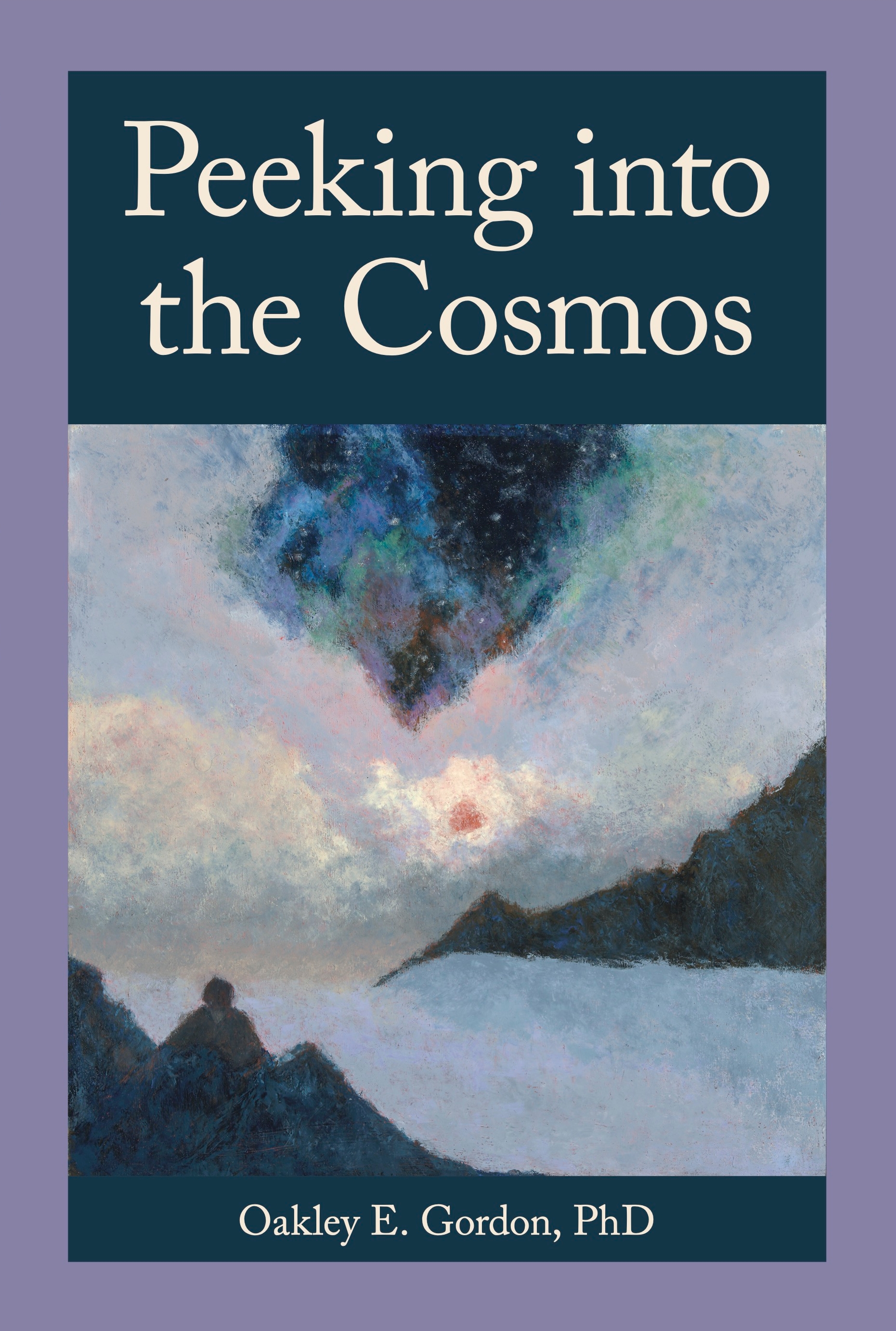
About this Book
More Information About the Andean Cosmovision
- Web Site. Salka Wind.The web site serving as the hub for accessing my writings on the Andean Cosmovision.
- Blog. The Salka Wind Blog. Some 150 posts I've written over the past 15 years about the Andean Cosmovision.
- Book. The Andean Cosmovision: A Path for Exploring Profound Aspects of Ourselves, Nature, and the Cosmo (2014). The Andean Cosmovision is fundamentally different than the Western worldview. The Cosmovision is not a set of concepts or beliefs. It cannot be described or encompassed by words. It can, however, be experienced and it can be explored. This is a guidebook for exploring the Andean Cosmovision through simple meditations. For this path you don’t need a guru. You need the Pachamama (the great being who is the mother earth); you need the Apus (the great beings who are the majestic mountain peaks); you need the stars, the wind, the trees, the rivers, the sun. This book will open the door to new territory and give you a map and some advice.
Blurb
Our experience of the Cosmos, of reality, is framed and defined by the worldview given to us by our culture. The Andean Cosmovision is a worldview found in the traditional, indigenous culture of the high Andes. This Cosmovision opens doors in our experience of reality that allow the inherent beauty and mystery of the Cosmos to flow through and inform our lives. For over thirty years, the author has been exploring the Andean Cosmovision under the mentorship of don Américo Yábar, a mystic and poet from the high Andes, and his son Gayle Yábar, a person of great heart and power. The stories in this book recount the author’s adventures in Peru with don Américo and Gayle, with the land and the people who live there, and the beautiful and mysterious reality in which they live.
About the Author
Oakley Gordon holds a doctorate in cognitive psychology (the study of perception, attention, memory, and consciousness). For thirty years, he has been studying the Andean Cosmovision under the mentorship of the Peruvian poet and mystic don Américo Yábar and his son Gayle Yábar. In his trips to Peru, Oakley has also worked with many other Andean paq’os (mystics/shamans) and healers. He has shared the Andean Cosmovision with Western society through papers at academic conferences, presentations to the public, journal articles, the Salka Wind blog, several hundred experiential classes and workshops, and two books: The Andean Cosmovision: A Path for Exploring Profound Aspects of Ourselves, Nature, and the Cosmos (2014) and Peeking into the Cosmos (2026).
Chapter One: Why Stories?
There is some information that cannot be conveyed in normal expository prose but that can, however, be transmitted through stories. The comparative mythologist Joseph Campbell addresses this in his landmark book The Power of Myth. In this book he makes the case that myths are not simply ancient fabrications. They are, instead, implicit blueprints for how we can develop to our full potential as human beings. Myths, legends, and tales are the only way this type of information can be transmitted, for it can only be effectively expressed implicitly. To appreciate this, we must realize that our rational mind, our consumer of the explicit, is not our be-all and end-all. While it is of great utility, our intellect is but one aspect of our mind, and our mind is but one aspect of who we are as beings in this place and time.
Along a similar vein, JRR Tolkien, professor of philology and Old English literature, said in his historic essay, On Fairy Stories, that fairy stories and legends convey important information that cannot be conveyed in any other way. Such stories have the potential to open cracks in our view of reality that let the light shine through. Normal prose speaks from within our current view of reality, but there is something beyond, something that cannot be described but can be perceived, when the cracks open.
On the other hand, sometimes a story is just a story.
The stories in this book mainly recount my adventures with don Américo Yábar, a poet and mystic from the high Andes of Peru, and his son Gayle Yábar, a person of great heart and power. The stories tell of my travels to Peru to work with Américo and Gayle and with the other shamans and mystics with whom they have arranged for me to work, and of my experiences with the land and the people who live there, and the reality in which they live.
These stories are as true as I could make them. Inevitably my notes and my memories of these events will be inaccurate to some degree. In addition, I have edited out some details of my adventures as being unnecessary to the stories, but I have striven to not change what really happened in doing so. That the stories are about me is irrelevant (to everyone but me). While the events unroll through my perspective, I am not the most important character in the stories. I hope you can look beyond the person who is experiencing this to focus instead on the reality that is being experienced.
Cracks in my reality opened during these experiences and the light of the Cosmos shone through. I believe that what has come through the cracks is “salka”. “Salka” is a Quechua term for “undomesticated energy”. It is one of those terms, like “Tao”, that points at the essence of reality that lies beyond any attempt to define or describe it. Salka is a wind that gently blows from beyond the stories, through the words of these stories, to you. Don Américo once invited me to be his John Watson, his James Boswell, his Carlos Castaneda and to write about my experiences with him. I realize that in doing so I have become a chronicler of salka.
It is my hope that in my relating these experiences that cracks may open in your experience of reality and that you may come to have a sense of what salka is, in the only way I know of expressing it, within a story.
If not, then I hope, at least, that you will enjoy these stories and find them interesting. They shed light on a way of understanding and interacting with reality that I have found to be more beautiful and healthier than that of our modern Western worldview. It has its roots in ancient times, yet it is strikingly relevant to our world’s problems and to the reflection of these problems in our experiences today.
And if not that, then I hope that my grandchildren, and their children, enjoy these stories, and through them get to know me, and glimpse a way of life of arresting beauty that for them will be far away and long ago.
The Table of Contents
- Why Stories?
- Roots
- Meeting don Américo
- Entering the Andes
- The Slopes of Apu Ausangate
- Journey to Ccochamocco
- Just Visiting (1)
- The Edge
- Just Visiting (2)
- Salka Revisited
- Field Trip
- Kenosis Spirit Keepers
- Solo (1)
- Solo (2)
- Blossoming
- Waikis to Peru
- Penultimate Trip
- Parting Shadows